




How-To Manage Reports in the Portals
NOTE The following are instructions for Portal Managers. Users can submit a request for a report to be published to the portal by following three easy steps.
One of the eComm specialist’s roles (and Super Users) in Cvent includes managing how stakeholders can access Cvent data in real-time, without a cost. Portal Managers can follow the steps below to create Portal Users and Publish Reports to the Portal for easy access.
STEP 1 | Add User(s) to Portal
Having trouble adding a portal user? If the person is a current test user, it might indicate the username is already taken. Submit a help ticket to remedy the issue.
To access reports via the portal, someone must be a Portal User (a free license). Portal Managers can follow the next steps to create new Portal Users.
Create Portal User
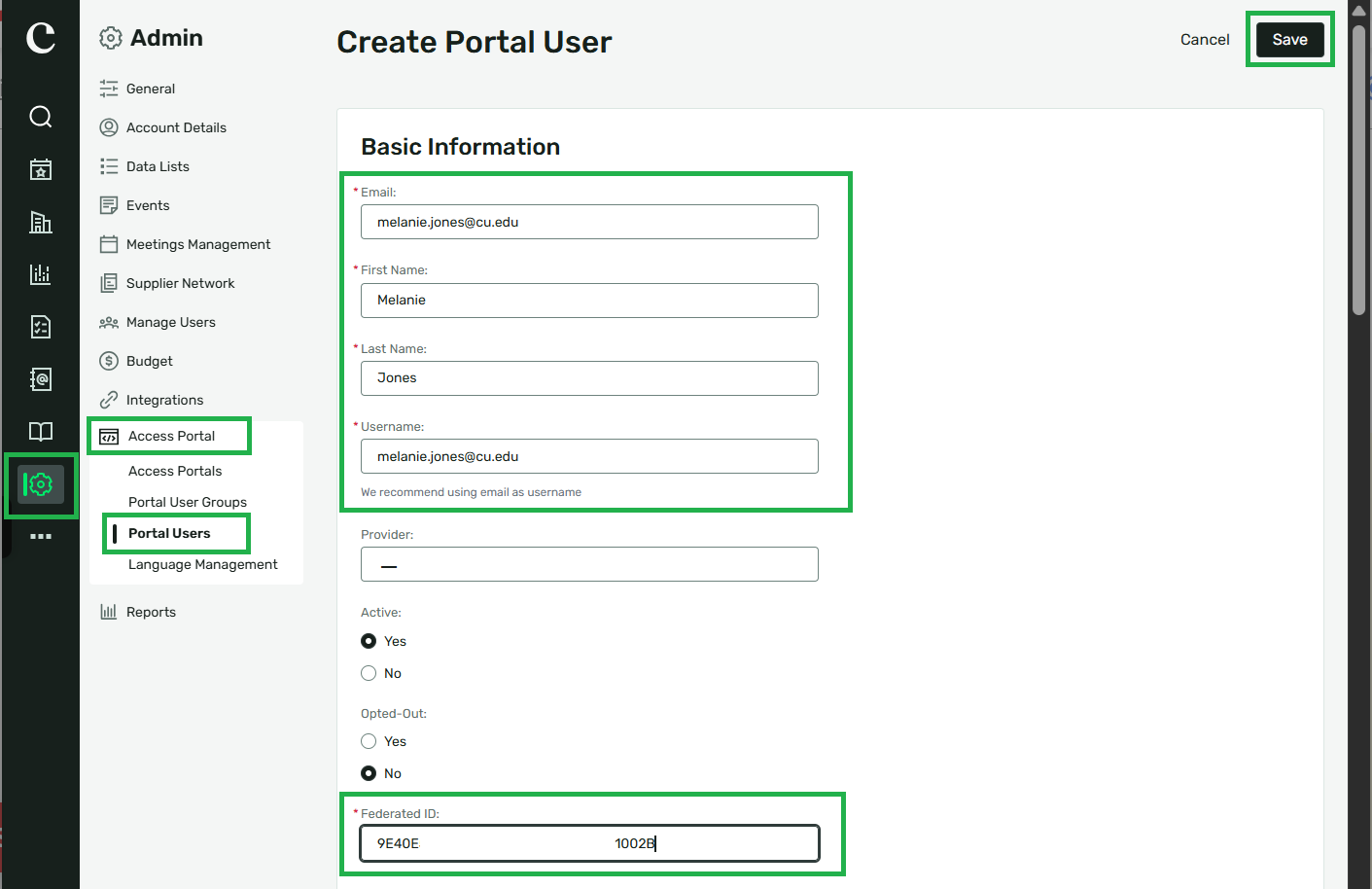
- Select the Admin (or gear icon) near the bottom of the left navigation
- Select Access Portal > Portal Users
- Select the black Create Portal User button in the top-right (not shown in screenshot below)
- Input the Email, First Name, Last Name, and Federated ID (see tab 2 for full details)
- Select the black Save button in the top-right
- If you get an error that they already exist, move on to the next step to add them as a guest to the Portal.
- If you do not have access to Salesforce, you can input a unique random dummy string of characters as the Federated ID. Otherwise:
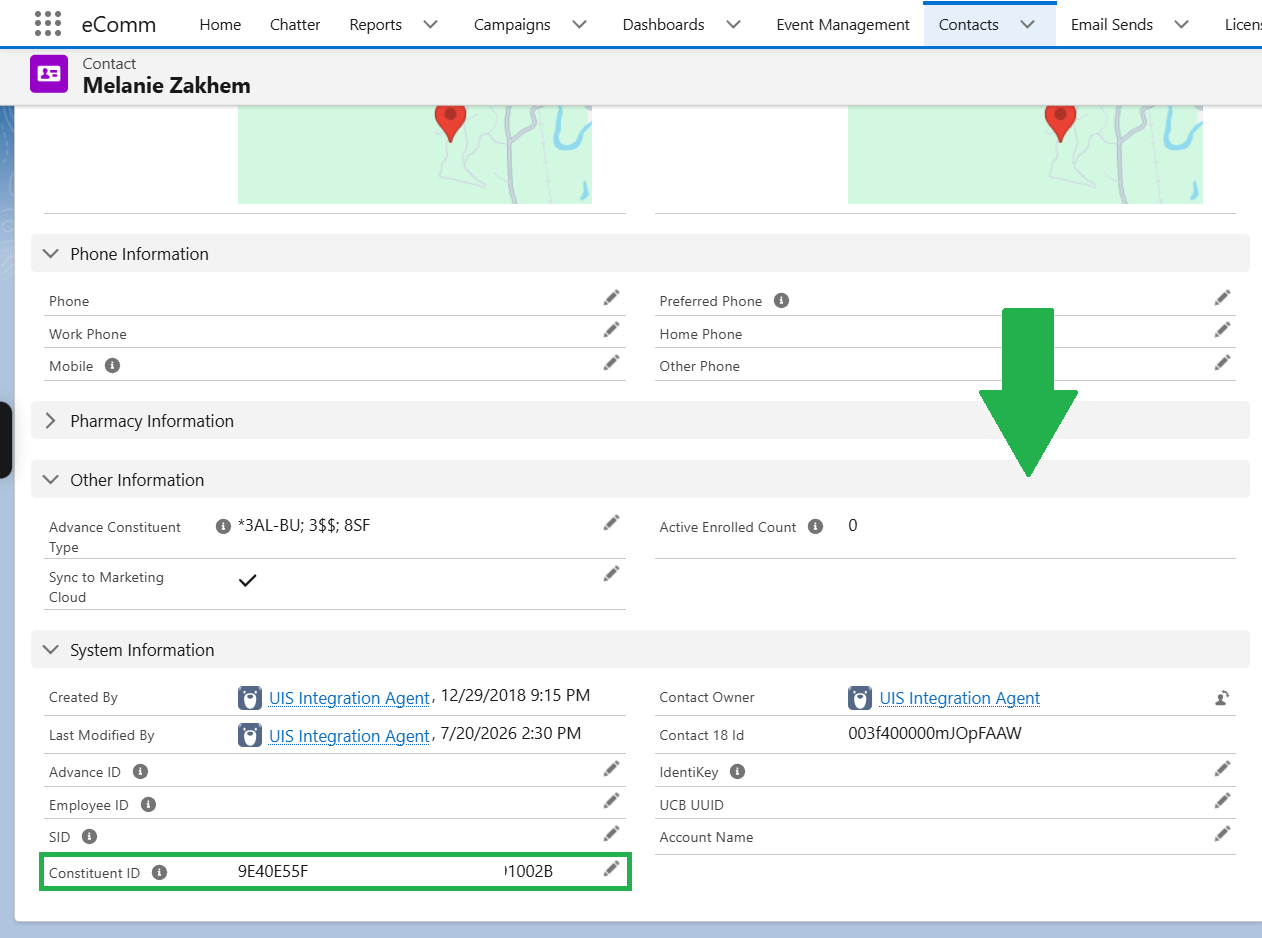
- Login to Salesforce
- Find the contact by searching for their email in the Global Search (search bar across the top)
- Open the Contact and scroll all the way to the bottom to find the Constituent ID
- Copy the Constituent ID as the Federated ID in Cvent, when creating the Portal User
Add to Portal
- In Admin (gear icon) > Access Portal > Access Portal
- Select University of Colorado Cvent Portal
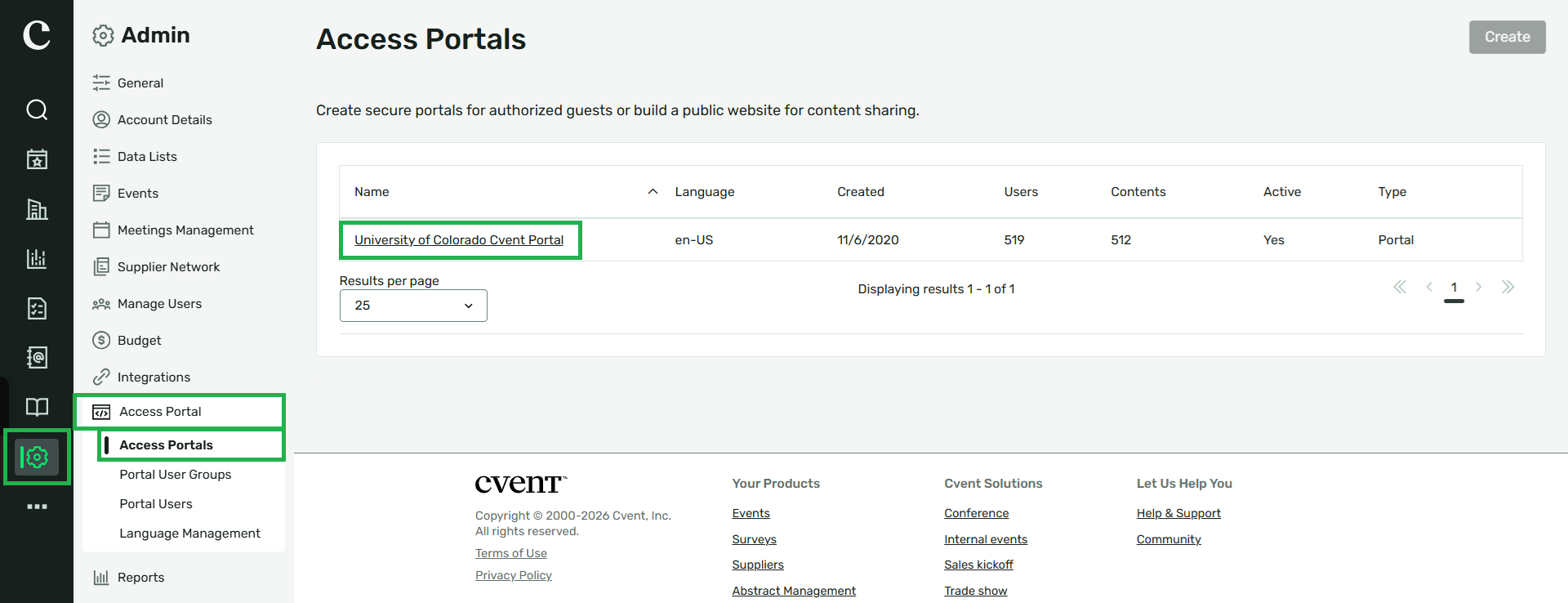
- Click the Guests tab
- Select the black Add Guests button in the top-right
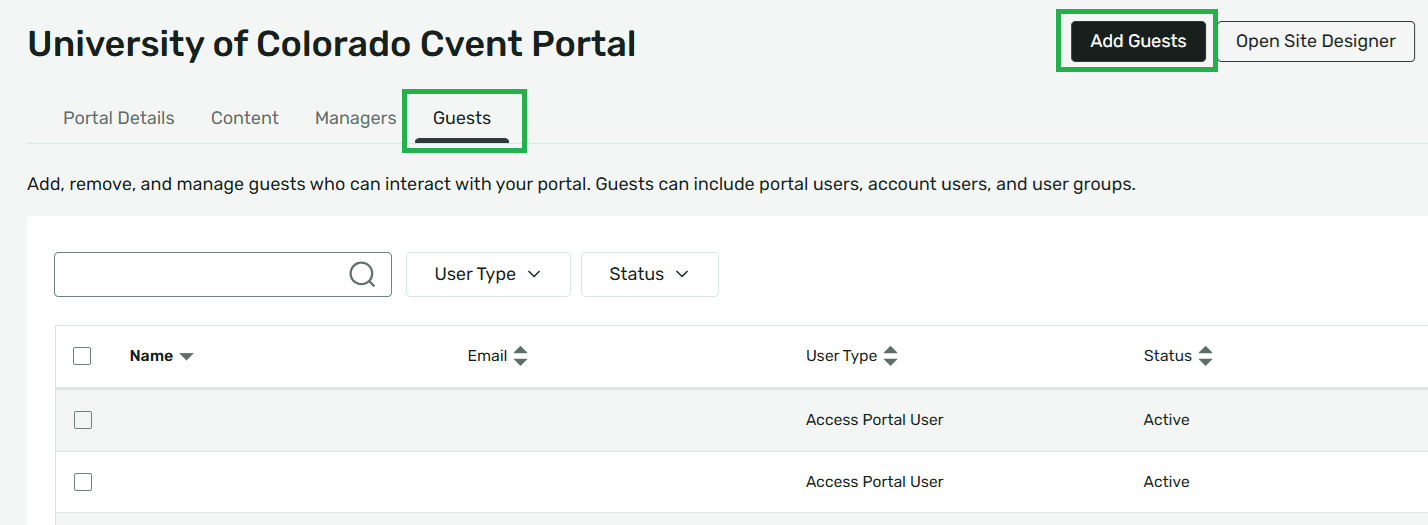
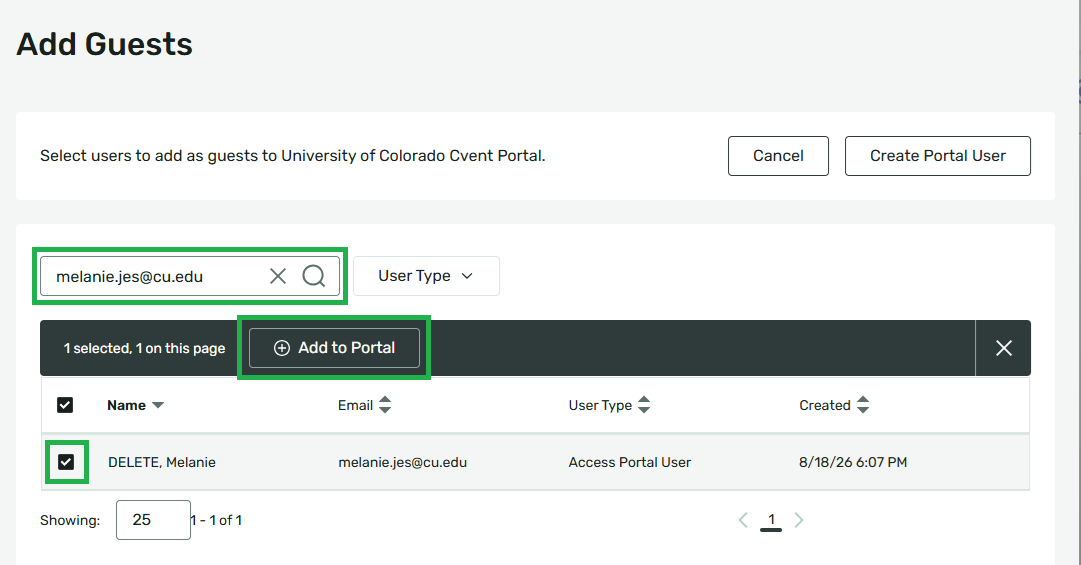
- Search or scroll for the Portal User you want to add
- Check the box next to their name, then select Add to Portal
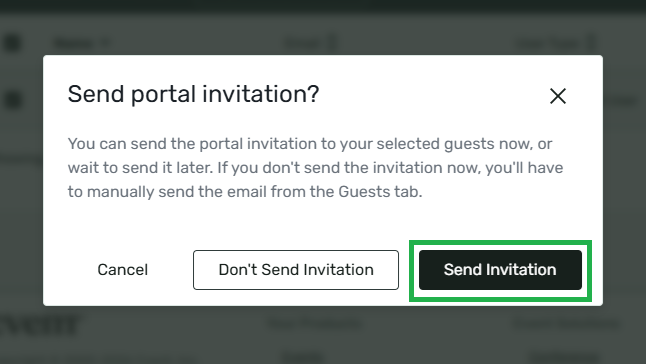
- In the pop-up, you can Send invitation (recommended) or Don't send invitation (and send later).
- Portal users need to create their password through the invitation, which expires after 24 hours. See Troubleshooting below if you need to resend the Portal Invitation.
- Once a password is set, they will be an Active Portal User within the University of Colorado Portal (meaning you can move on to step 3 - granting them access to a specific Report).
IMPORTANT FOR PAID LICENSED USERS
- License users who are also Portal users will not get an email because they do not need to set a password. These users will sign in with the same username and password for their Cvent account, so no need to remember two sets of credentials.
- Licensed Users (who are also Portal Users) can not be notified of a Report being published to the Portal via Cvent. Otherwise, all eComm specialists will also be emailed. You'll have to let these users know the old-fashioned way - through a separate message.
- Licensed Users (who are also Portal Users) must have the event shared with them AND the Portal Report shared with their Portal User to access data. If only the Report is shared with the Portal User (who also has a real, paid license), they will see the Report but when they run it, no data will display.
STEP 2 | Save Report with Naming Convention
Did a user create the Report?
They need to share the Report Visibility with their Portal Manager. Otherwise, the Portal Manager will not be able to view the Report or Publish it to the Portal.
A Portal Manager can publish the saved Report to the Portal and share it with specific users.
Create an Event or Cross-Event Report and Save the Report per naming convention.
- Naming Convention: 0X_DEPT_Event Name_Report Description
- Where X indicates your campus number
- DEPT indicates the department or unit
- Indicate the Event Name or Cross if it's a Cross-Event Report
- Add an _OG at the end if the report should never expire
Rename Report
- Rename a saved Report by navigating to the event and running the Report.
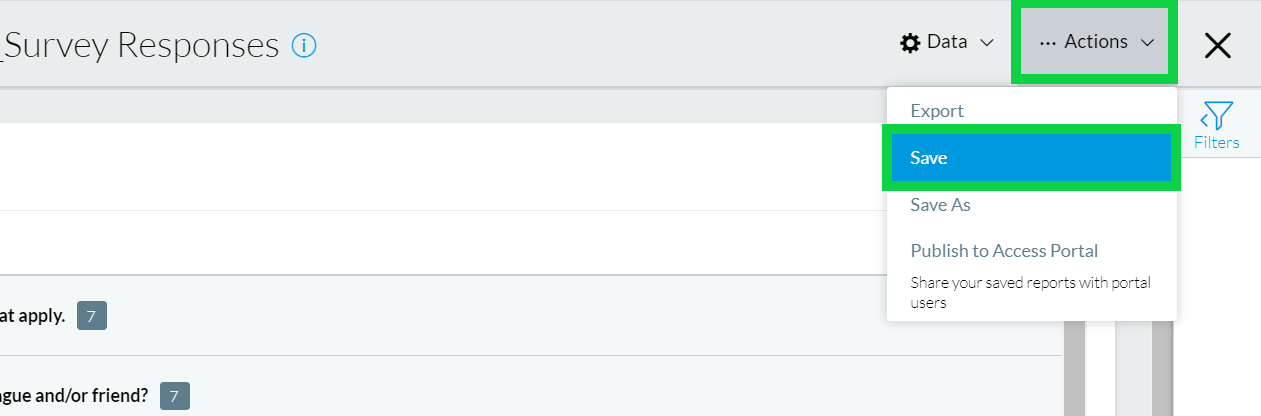
- Once run, hover over Actions in the top right >> Click Save in the dropdown (image below)
- In the pop-up, rename the Report and click Save.
Visibility
Edit the Visibility if you wish to share this Report with another full licensed user to access when they log in to Cvent. This is not the same as getting a report published to the Portal and shared with a (free) Portal User.
- To successfully share an event report with a licensed user, you must share the event and the event report.
STEP 3 | Publish to Portal
There are two different paths to Publish a Report to the Portal:
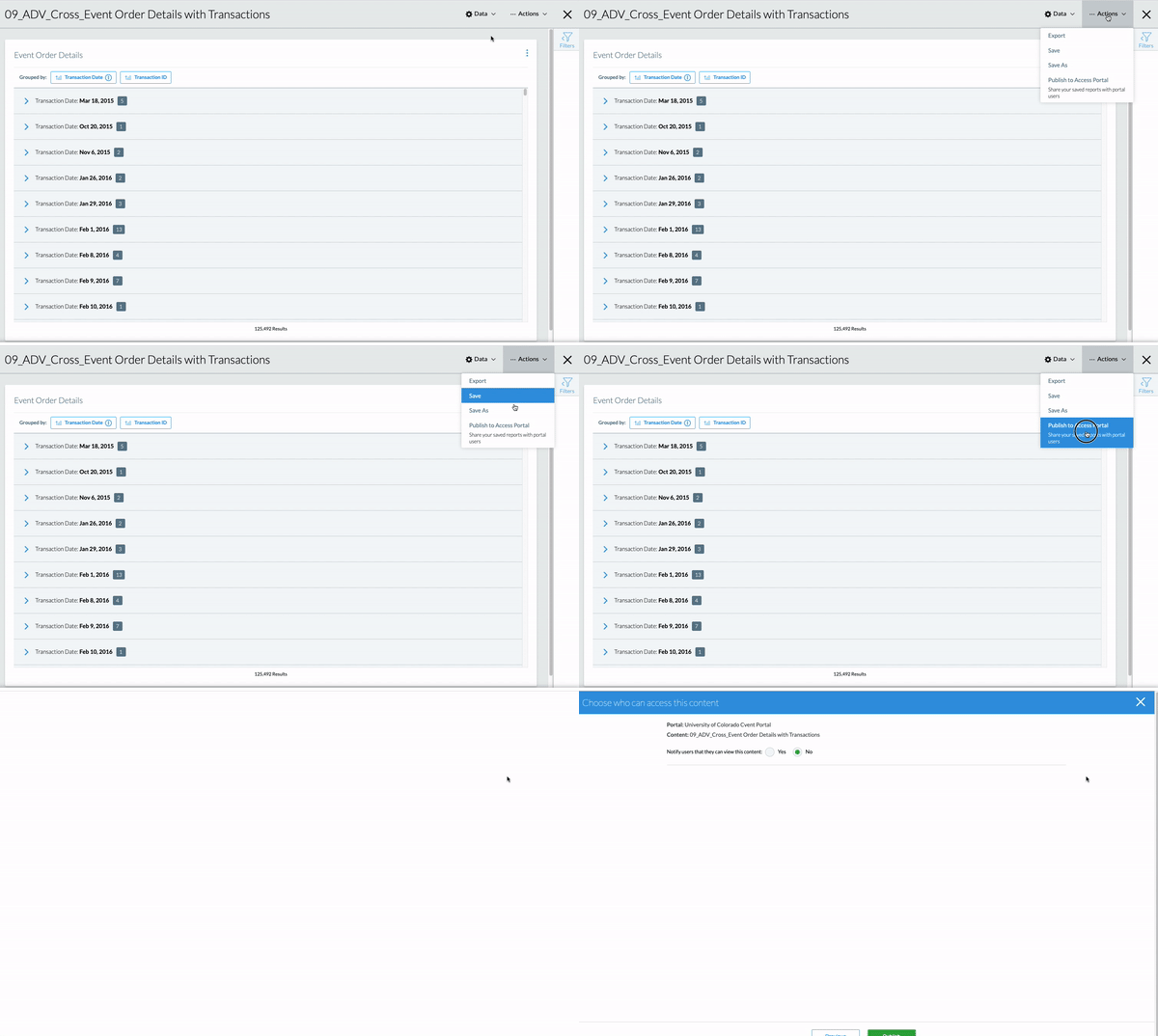
- After saving and running the Report (per the correct naming convention), hover Actions in the top-right
- Click Publish to Access Portal in the dropdown
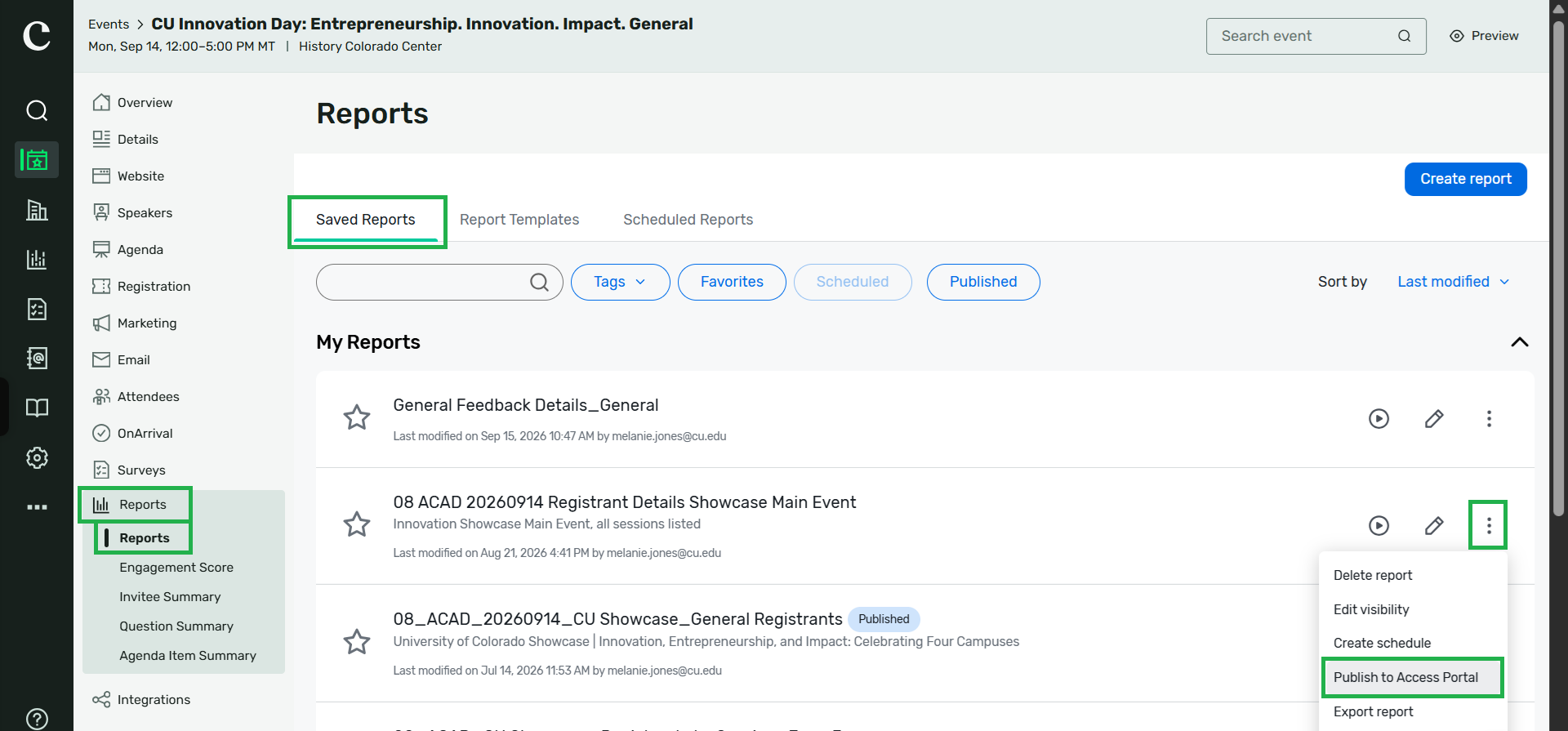
- Navigate to your event > Reports > Reports > Saved Reports tab
- Click the three vertical dots to the far left of a Saved Report > select Publish to Access Portal in the dropdown.*
- *Be sure your Report follows the correct naming convention (from step 2).
Content Expiration
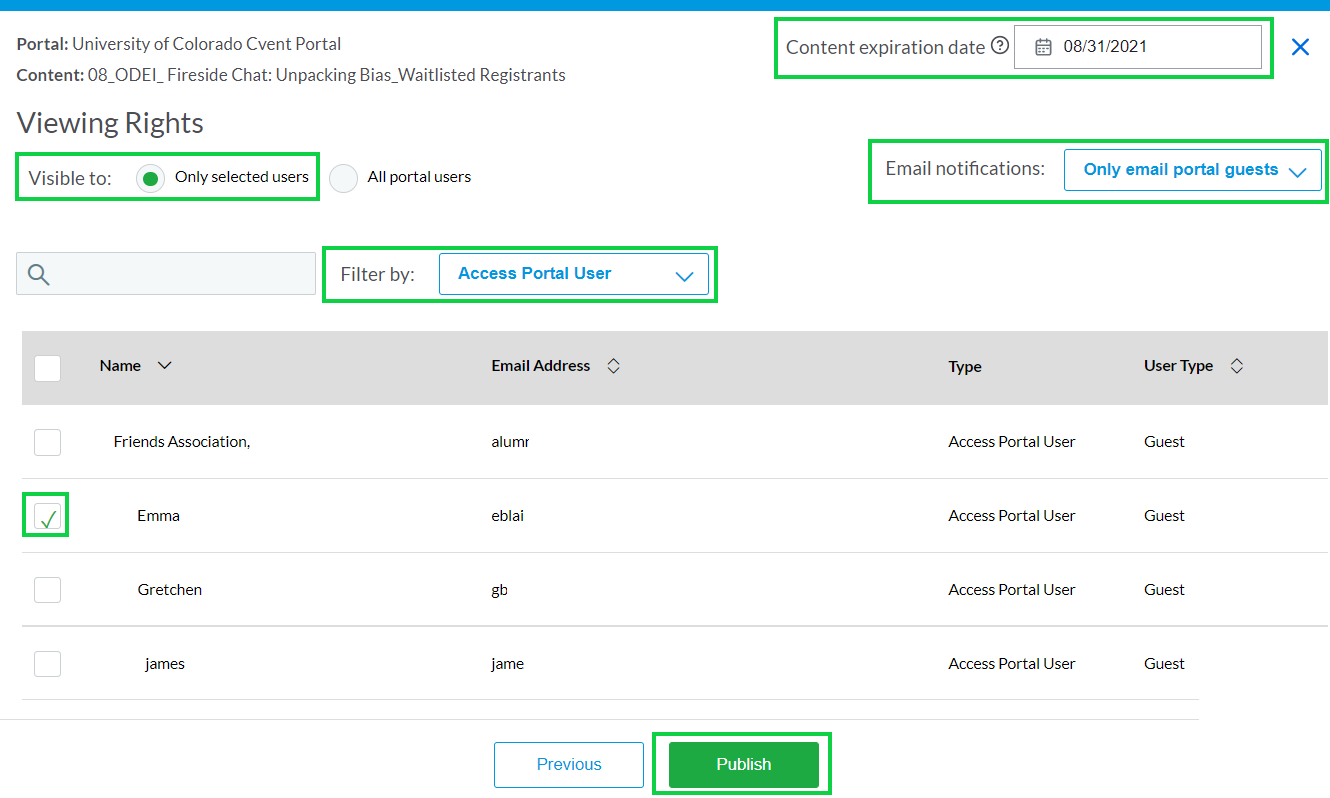
Required Set a Content expiration date in the top right corner for automatic unpublishing - minimizing clutter for the Portal User. Remember to end the report name with _OG if no expiration date is set.
NOTE Portal Managers will still see the Published Report in Admin >> Access Portal >> Access Portals >> Content tab after the expiration date. To avoid clutter, it's a best practice to remove published Reports after they expire (instructions below in step 4).
Viewing Rights
- Keep default Visible to: Only selected users
- Keep default Email notifications to: Only email portal guests
- Change Filter by dropdown to: Access Portal User
- Check the box next to the individuals who should have access
- *If you do not see a portal user here, it means they are not active yet. You might need to re-trigger the invite so they can set their password (once set, they are an active Portal User and can be selected).
- TIP! Add a Content expiration date (usually 30 days after the event closes) for the Report to automatically be removed from the portal user's view. You'll still need to Unpublish the Content to clean up the backend of Cvent.
- Click the green Publish button at the bottom of the page.
Important Note: Licensed Users (who are also Portal Users) must have the event shared with them AND the Portal Report shared with their Portal User to access data. If only the Report is shared with the Portal User (who also has a real, paid license), they will see the Report, but when they run it, no data will display.
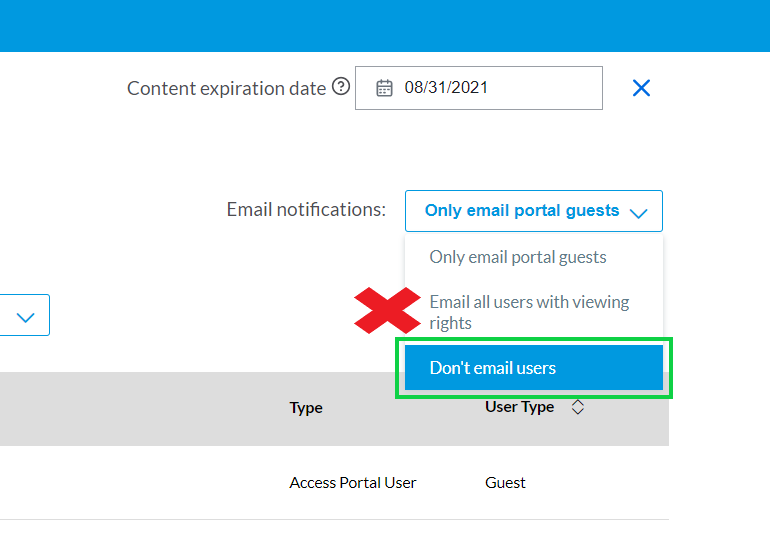
- If you do not want to notify anyone when a Report is Published, set Email notifications: Don't email users
!TIP! NEVER Email all users with viewing rights. This will email all Cvent admins and eComm specialists, in addition to the selected Portal User.
STEP 4 | Un-Publish from Portal
!TIP! Set a content expiration date when publishing a report (step 2) for automatic unpublishing from the Portal Users perspective.
NOTE Setting a content expiration on a published report (step 2) will NOT remove the report from the Portal Managers' perspective. automatic unpublishing from the Portal Users perspective. To avoid clutter for Portal Managers, it's a best practice to remove published Reports after they expire.
Manually Un-Publish Report
- Select Admin (gear icon) in the left navigation
- Click Access Portal in the navigation > then Access Portals in the navigation
- Select the University of Colorado Cvent Portal
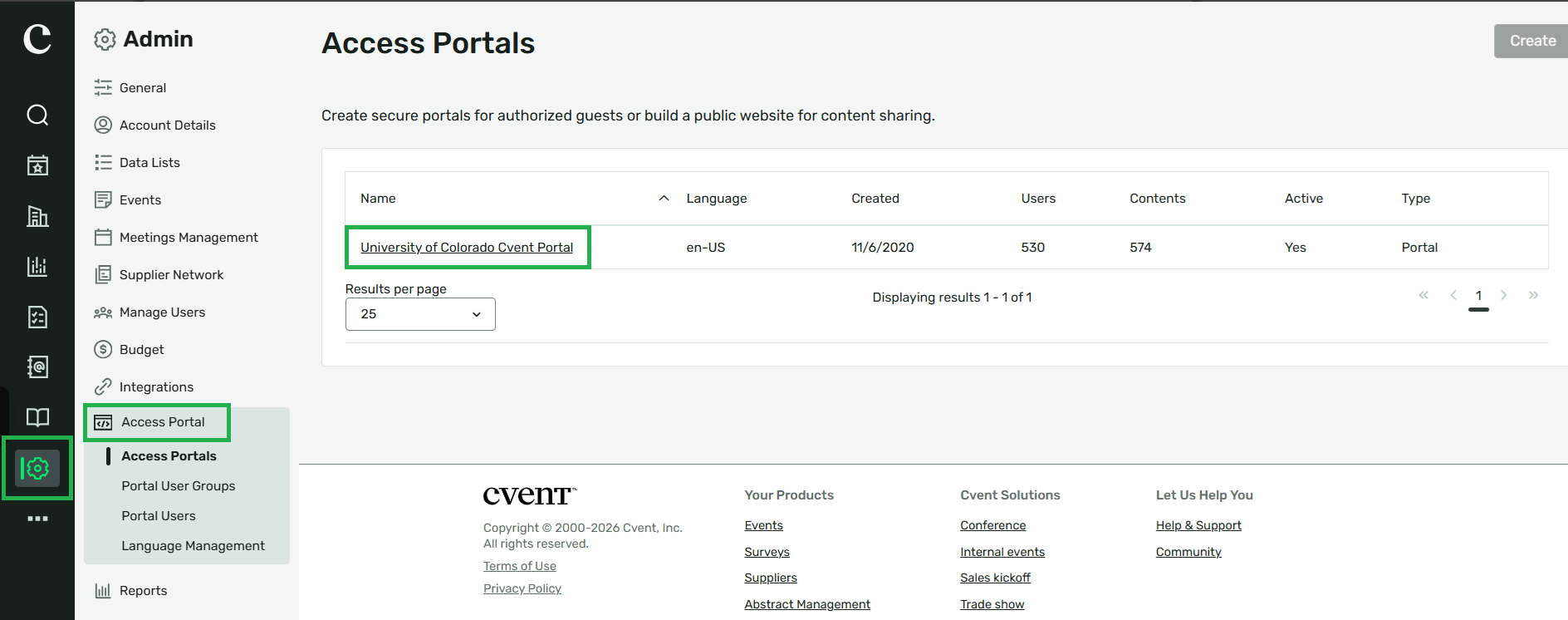
- Navigate to the second tab: Content
- Scroll/Search for Report name
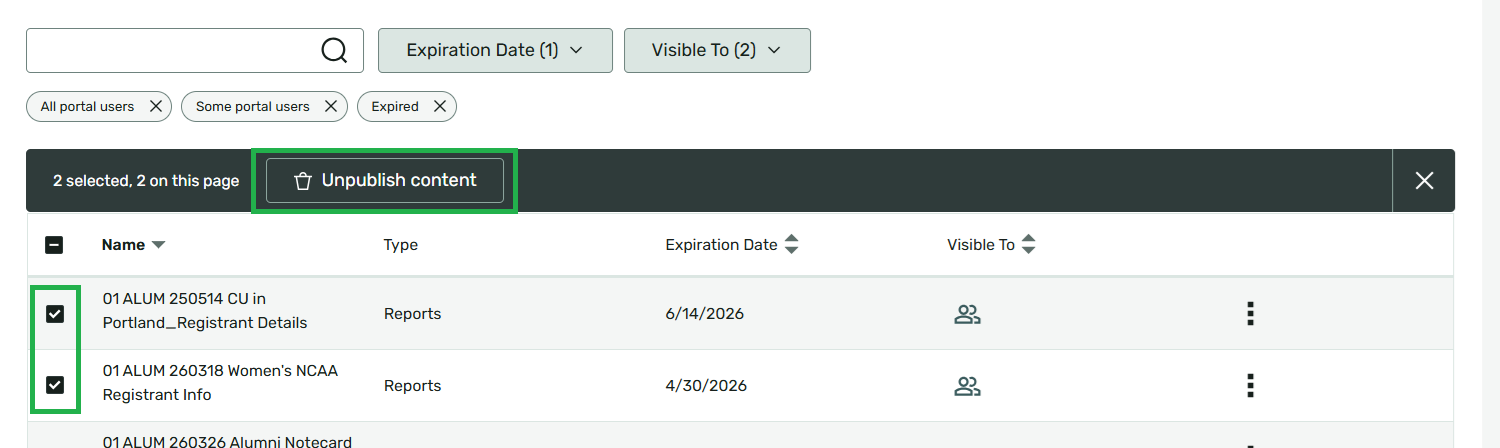
- Check the box next to the Report(s) you wish to unpublish
- Select Unpublish Content, which will pop up across the top
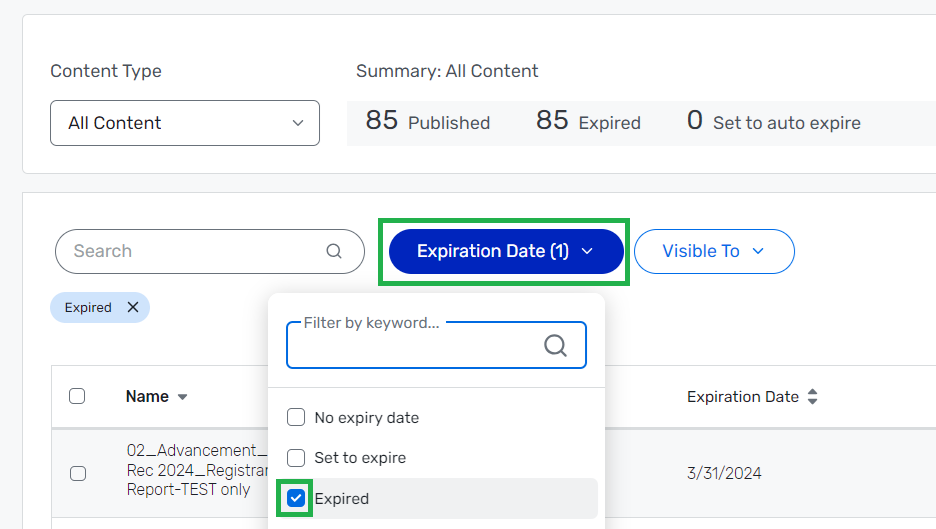
- !TIP! Assuming you set a Content Expiration Date when publishing, applying this filter can make Unpublishing Content even easier.
Troubleshooting
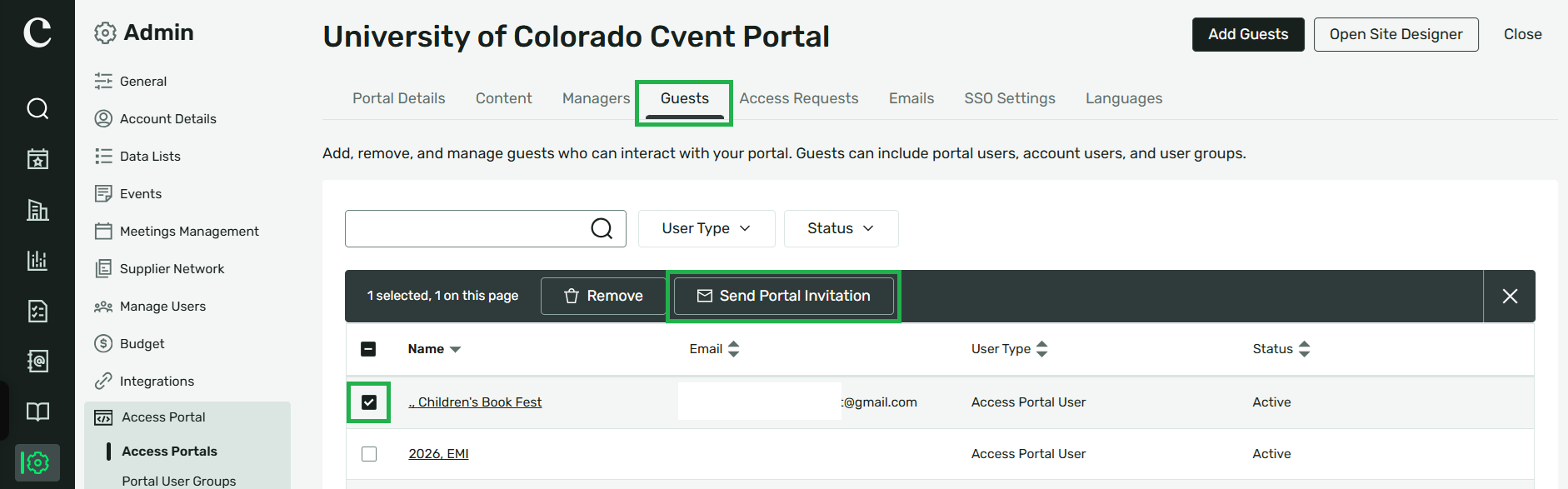
Need to resend a Portal Invitation or Remove a Portal User?
- Navigate to Admin >> Access Portals
- Select the only Portal listed
- Navigate to the Guests tab
- Check the box next to the person
- The Invited Status in the last column indicates they did not activate their account.
- Then you can Send Portal Invitation or Remove them.